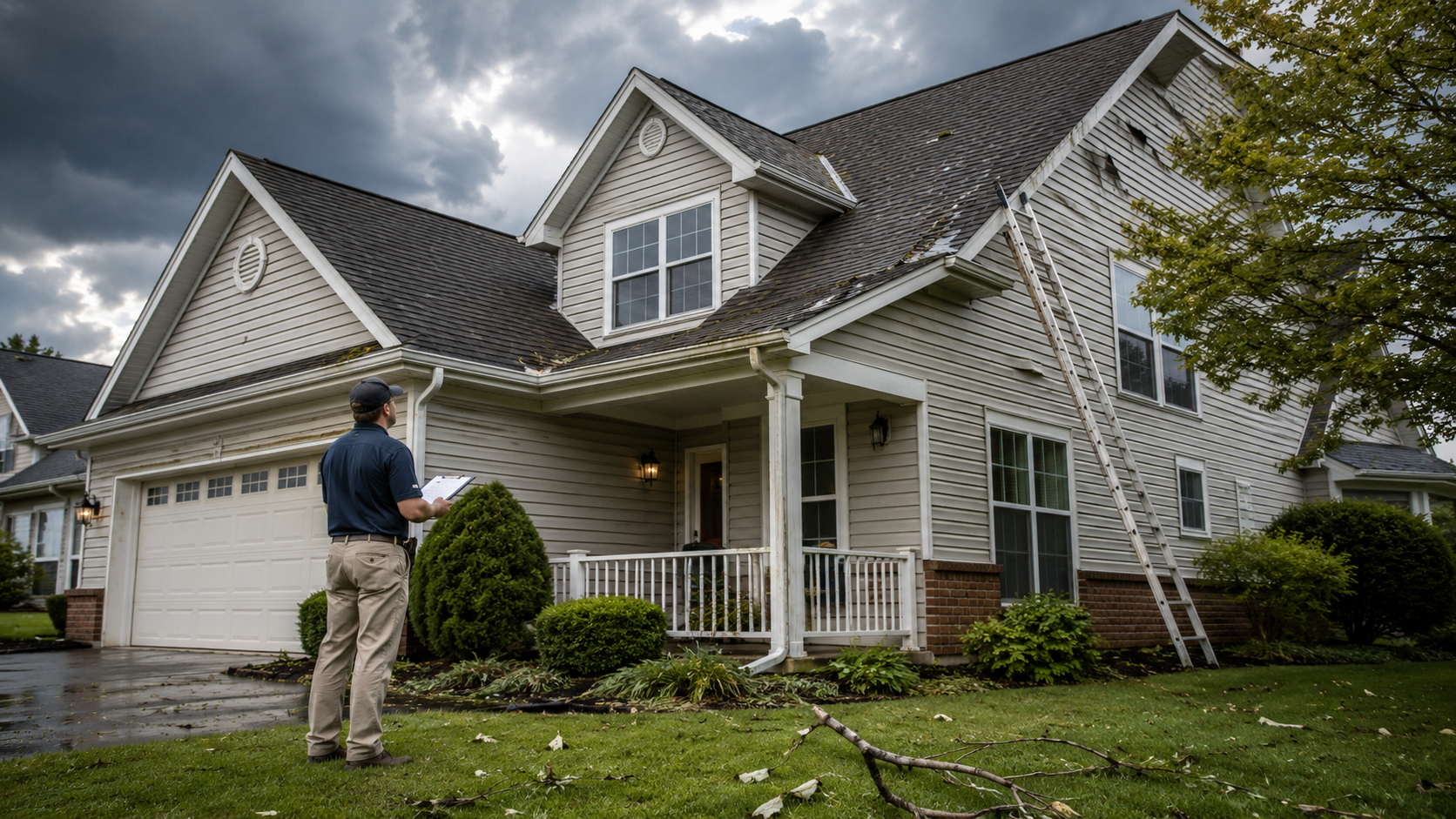

Before the Snow Flies: Is Your Milford Home's Roof Really Ready for Winter?
Ah, fall in Michigan. The leaves are changing, cider mills are calling, football is back, and we’re all pretending we don’t know what’s coming next.
Spoiler alert: Winter is coming. And your roof knows it.
Before long, those beautiful autumn afternoons in Milford, Highland, Commerce Township, and the surrounding communities will give way to freezing temperatures, snowstorms, icy gutters, and the occasional weather forecast that makes you question why you live in Michigan.
Your roof? It’s about to work overtime.
Unfortunately, many homeowners don’t think about their roof until water starts dripping from the ceiling or a suspicious stain appears in the upstairs bedroom. By then, a relatively minor problem may have turned into a much bigger—and more expensive—headache.
The good news? A little attention now can go a long way toward protecting your home this winter.
Whether your roof is five years old or pushing 25, knowing what to look for can help you decide whether you need a simple repair, a professional roof inspection, or a full residential roof replacement.
Let’s walk through nine warning signs that deserve your attention before Michigan winter arrives.
Why Fall Is the Perfect Time for a Roof Inspection in Milford, MI
Michigan doesn’t exactly ease into winter.
One week, you’re enjoying a sunny 65-degree afternoon. The next, you’re scraping frost off your windshield and wondering where you put the snow shovel.
That kind of temperature volatility is part of what makes winter preparation so important.
Throughout the colder months, your roof may encounter:
Freezing and thawing temperatures that expose existing vulnerabilities.
Snow accumulation that adds weight and can conceal damaged roofing materials.
Ice dams that prevent melting snow from draining properly.
High winds that can loosen already weakened shingles.
Moisture intrusion that affects insulation, roof decking, and interior surfaces.
For homeowners in Milford and neighboring communities, fall presents a valuable opportunity to identify problems while roofing conditions are generally more favorable for inspection and repair.
And no, that doesn’t mean every roof needs to be replaced before December.
Quite the opposite.
A professional inspection can help distinguish between manageable maintenance issues and more significant problems that could compromise your home’s protection.
The goal isn’t to spend money unnecessarily. It’s to avoid spending more money because a preventable issue went unnoticed.
9 Warning Signs Your Roof May Not Be Ready for Michigan Winter
Some roofing problems announce themselves with an unmistakable drip.
Others are a little more subtle.
Here are nine warning signs homeowners should watch for.
1. Missing, Cracked, or Curling Shingles
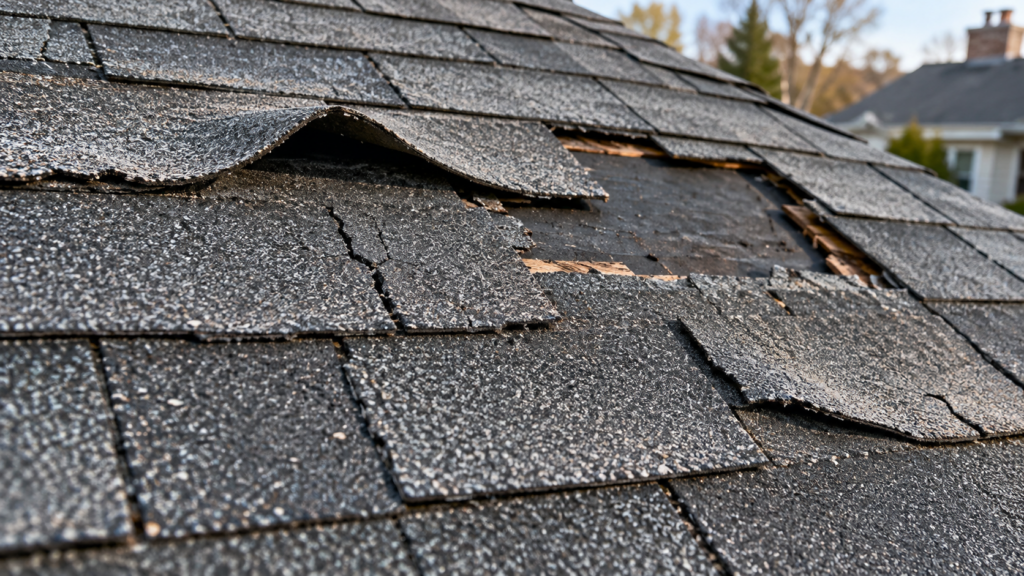
Your shingles are the first line of defense against rain, snow, and wind.
When they’re damaged, that protection becomes less reliable.
Look for shingles that are:
Missing entirely.
Cracked or splitting.
Curling upward at the edges.
Buckling or lifting away from the roof.
Visibly worn or deteriorating.
A missing shingle doesn’t automatically mean you need a new roof. In some cases, an isolated roof repair may be perfectly reasonable.
However, widespread deterioration (especially on an aging roof) may indicate that the roofing system is approaching the end of its useful life.
Why winter makes this worse: Wind, snow, and freeze-thaw cycles can aggravate existing damage, increasing the risk of water getting beneath the roofing materials.
What to do: Inspect your roof visually from the ground using binoculars. If you notice damaged or missing shingles, contact a qualified roofing contractor for a closer evaluation.
2. Granules Collecting in Your Gutters
Ever notice what looks like coarse black sand accumulating near your downspouts?
Those little particles could be granules from your asphalt shingles.
Granules help protect shingles from ultraviolet exposure and weathering. Some granule shedding is normal, particularly with newer roofs, but substantial or continuing loss can be a warning sign.
Other clues include:
Bald-looking patches on shingles.
Uneven discoloration across roof sections.
Large amounts of granules accumulating after rainfall.
Shingles that appear unusually smooth or worn.
If your roof is older and you’re noticing significant granule loss, it may be time to evaluate its remaining service life.
Why winter makes this worse: A deteriorating shingle system may be less resilient when exposed to prolonged moisture, snow, and ice.
What to do: Have a professional evaluate the overall condition of the shingles rather than judging roof health by gutter debris alone.
3. Damaged Flashing Around Chimneys, Vents, and Skylights
Here’s a roofing secret: Sometimes the shingles aren’t the problem.
The trouble is where your roof meets something else.
Flashing is the metal or other weather-resistant material installed around roof penetrations and transitions, including chimneys, vents, skylights, and roof-to-wall intersections.
Its job is to direct water away from vulnerable joints.
Unfortunately, damaged or improperly installed flashing can create entry points for moisture.
Warning signs may include:
Rusted or visibly displaced flashing.
Gaps around chimneys or roof penetrations.
Loose counterflashing.
Deteriorated sealant around roof components.
Interior water stains near chimneys or skylights.
Why winter makes this worse: Snowmelt and ice can allow water to linger around already vulnerable roof transitions.
What to do: Ask your roofing contractor to examine flashing and penetrations as part of a comprehensive inspection.
A repair to one compromised area may solve the problem without requiring a complete roof replacement.
4. Water Stains on Ceilings or Walls
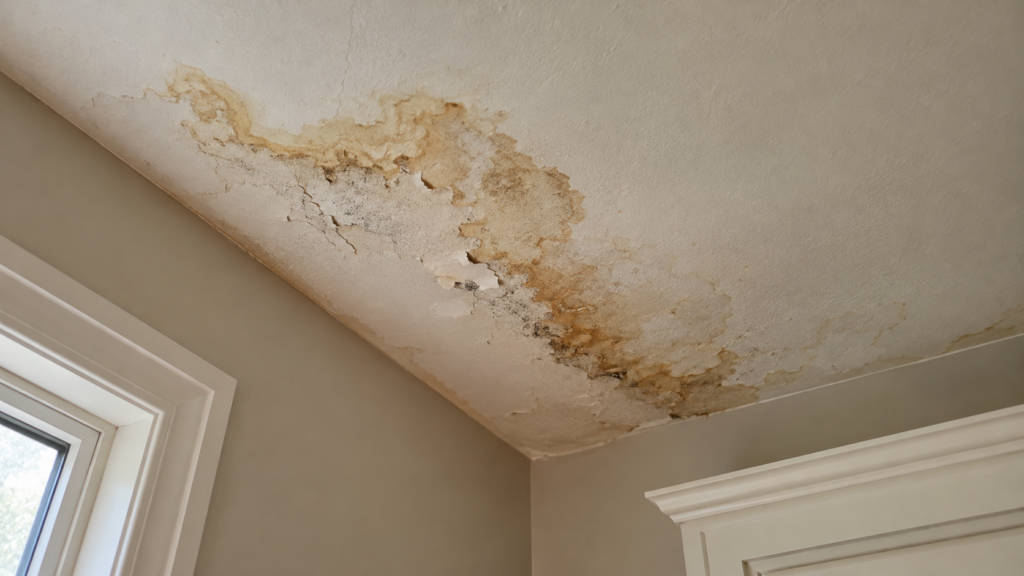
A mysterious brown stain on your ceiling isn’t exactly the home improvement surprise anyone was hoping for.
Unfortunately, it may indicate a moisture problem that needs attention.
Common signs include:
Yellow or brown ceiling stains.
Bubbling or peeling paint.
Damp drywall.
Musty odors near the attic.
Repeated moisture problems after heavy rain.
It’s important to remember that not every ceiling stain comes from a roofing leak. Plumbing, condensation, and ventilation issues can sometimes produce similar symptoms.
However, when moisture appears after rainfall or snowmelt, roof-related water intrusion becomes an important possibility to investigate.
Why winter makes this worse: Water that enters an attic or wall assembly can damage insulation, drywall, and wood components. Prolonged moisture may also create conditions favorable to microbial growth.
What to do: Don’t simply paint over the stain.
Identify the source, correct the underlying problem, and address damaged materials.
If water is actively entering your home, move valuables away from the affected area and arrange prompt professional assistance.
5. Sagging Rooflines or Uneven Roof Surfaces
A roof should have a consistent profile appropriate to its design.
If you notice an unusual sag, dip, or uneven section, don’t dismiss it as a charming architectural quirk.
Potential causes can include:
Damaged or deteriorated roof decking.
Framing deficiencies.
Long-term moisture exposure.
Structural movement.
Excessive loading.
Not every uneven roofline indicates an emergency. Some older homes have minor irregularities that have existed for years.
However, a newly developing sag or noticeable change in roof shape deserves professional evaluation.
Why winter makes this worse: Snow accumulation adds weight to a roofing structure, potentially aggravating an existing structural problem.
What to do: Contact a qualified roofing or structural professional promptly.
If a roofline is visibly changing, avoid entering the affected area until it has been assessed.
6. Gutters That Are Clogged, Loose, or Pulling Away
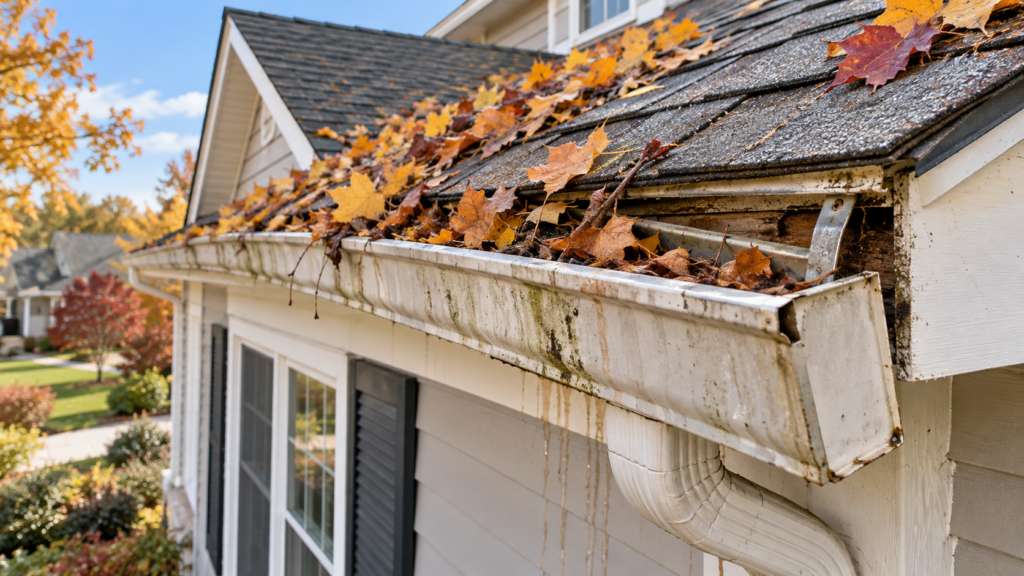
Let’s give gutters a little credit.
They’re not the most exciting feature of your home, but they do a pretty important job.
Gutters help direct rainwater and melting snow away from your roof edges, siding, and foundation.
When they become clogged or damaged, water may overflow or drain where it shouldn’t.
Watch for:
Gutters packed with leaves and debris.
Sections pulling away from the fascia.
Loose or missing fasteners.
Water overflowing during rainfall.
Downspouts that discharge water too close to the foundation.
Why winter makes this worse: Blocked drainage can contribute to water accumulation and icing near the roof edge.
Although clogged gutters aren’t the sole cause of ice dams, keeping them clear helps water drain when temperatures permit.
What to do: Arrange safe gutter cleaning and make necessary repairs before prolonged freezing weather arrives.
For multistory homes or difficult-to-access gutters, professional cleaning is usually the safer option.
7. Poor Attic Insulation or Ventilation
Here’s something many homeowners don’t realize:
Your attic can influence how your roof performs during winter.
Warm, moist indoor air that escapes into the attic can create problems when it contacts cold surfaces.
In certain roof configurations, escaping heat can also contribute to uneven snowmelt and ice dam formation.
Signs that your attic deserves attention include:
Condensation or frost on the underside of roof decking.
Damp or compressed insulation.
Persistent musty odors.
Evidence of blocked soffit vents.
Significant temperature differences between rooms.
Recurring ice buildup near roof edges during winter.
Proper air sealing, insulation, and ventilation work together to help manage temperature and moisture.
Importantly, ventilation requirements depend on the roof assembly. An unvented roof designed for conditioned attic space has different requirements than a traditionally vented attic.
Why winter makes this worse: Cold-weather temperature differences increase the consequences of uncontrolled heat and moisture movement.
What to do: Have the attic’s insulation, air sealing, and ventilation evaluated as part of a broader roof-performance assessment.
A roofing contractor and qualified insulation specialist may both be involved.
8. Evidence of Previous Ice Dams
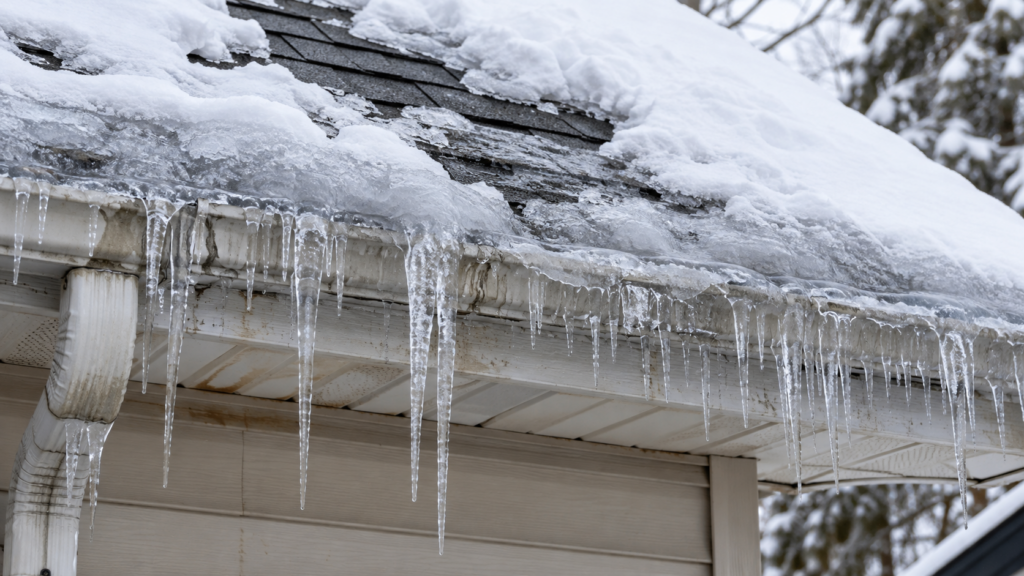
Remember those giant icicles hanging from the roof last February?
They may have looked impressive, but they weren’t necessarily good news.
Ice dams develop when snow melts on a warmer part of the roof, flows toward a colder roof edge, and refreezes.
As ice accumulates, it may prevent additional meltwater from draining, allowing water to back up beneath roofing materials.
According to Michigan’s guidance on preventing roof ice dams, important preventive measures include keeping gutters clear and evaluating attic insulation and ventilation.
Common indicators include:
Repeatedly forming thick ice ridges at roof edges.
Large icicles combined with drainage problems.
Water stains that appear during snowmelt.
Interior leaks near exterior walls.
Recurring winter moisture problems in the attic.
Not every icicle means an ice dam is present, but repeated ice buildup deserves investigation.
Why winter makes this worse: Once the right conditions develop, recurring freeze-thaw cycles can allow ice and trapped water to accumulate.
What to do: Address the underlying causes before winter.
Avoid climbing onto an icy roof or trying to chip ice away with sharp tools. Both can result in injury or roofing damage.
9. Your Roof Is Getting Older, and Showing Its Age
Even a professionally installed roof won’t last forever.
For many Milford-area homes, asphalt shingles are a common roofing material, and their service life varies based on the product, installation quality, ventilation, maintenance, and weather exposure.
As a general planning guideline, many asphalt shingle roofs have useful lifespans measured in decades, often around 20–30 years, although individual roof systems may last less or longer.
Age alone doesn’t determine whether replacement is necessary.
But if your roof is approaching the later part of its expected service life and showing multiple symptoms from this list, it’s worth evaluating before another winter.
Ask yourself:
How old is the roof?
Have repairs become more frequent?
Are multiple areas showing deterioration?
Has the roof experienced significant storm damage?
Is water intrusion recurring?
Would another repair provide a reliable long-term solution?
What to do: Schedule a professional assessment that considers the roof’s overall condition, and not just its age.
Because sometimes the smartest investment is a targeted repair.
And sometimes the smarter decision is to stop paying to patch a roofing system that’s nearing retirement.
Roof Repair or Replacement Before Winter: Which Makes More Sense?
This is where many homeowners get stuck.
You’ve noticed a problem, but you’re not sure whether you need a relatively small repair or an entirely new roof.
And let’s face it: Nobody wants to replace a roof unnecessarily.
Here’s a practical way to think about the decision.
When Roof Repair May Be the Right Choice
A roof repair may be appropriate when:
Damage is confined to a small area.
The surrounding shingles remain in good condition.
A localized flashing or penetration problem is responsible for leaking.
Your roof is relatively young and otherwise performing well.
The underlying decking and roof structure are sound.
A repair can reasonably restore weather resistance.
For example, if a windstorm damages a small group of shingles on an otherwise healthy roof, replacing those shingles may be sufficient.
When Roof Replacement Deserves Serious Consideration
A full replacement may be the better long-term investment when:
Damage affects multiple sections of the roof.
Shingles are extensively brittle, cracked, or curling.
Leaks continue despite repeated repairs.
There is significant deterioration of the roof system.
The roofing materials are nearing the end of their useful life.
The cost of recurring repairs is becoming difficult to justify.
An older roof with widespread deterioration may need more than another temporary patch.
What About Roof Replacement Cost in Milford, Michigan?
Roof replacement costs depend on several factors, including:
Total roof area and pitch.
Architectural complexity.
Roofing material and product selection.
Existing layers that must be removed.
Condition of the decking.
Ventilation and flashing requirements.
Labor and site-access considerations.
Rather than relying on a generic national price, homeowners should request a detailed local estimate that explains what’s included.
At Rashid Construction, we believe you deserve to understand your options before making a major investment.
Our team can evaluate your existing roof, explain what we find, and help you decide whether a repair or replacement makes the most sense for your home and budget.
Ready for answers instead of guesswork?
Don't Forget the Rest of Your Home's Exterior
Your roof deserves plenty of attention before winter, but it isn’t the only part of your home facing months of snow, ice, and freezing temperatures.
Your siding, windows, gutters, and exterior trim all play important roles in keeping moisture and cold air where they belong.
Inspect Your Siding for Cracks, Gaps, and Loose Panels
Damaged siding can allow wind-driven precipitation to reach the protective layers beneath it.
Depending on the siding type, warning signs may include cracking, warping, loose panels, deteriorated caulking, or visible moisture damage.
Learn more about Rashid Construction’s siding installation and replacement services
Check Windows and Exterior Seals
Drafty windows, deteriorated weatherstripping, and damaged exterior sealant can contribute to uncomfortable rooms and unwanted heat loss.
Pay particular attention to windows that show condensation between panes, damaged frames, or evidence of water intrusion.
Look for Trouble Around Chimneys and Exterior Trim
Chimney flashing, masonry, fascia, and exterior trim are frequently exposed to moisture.
Loose materials, deteriorated joints, or visible water damage should be evaluated before freezing weather makes repairs more challenging.
Think of your home’s exterior as a team. Your roof may be the captain, but the rest of the lineup needs to show up, too.
Your 15-Minute Fall Roof Inspection Checklist
You don’t need to become a roofing expert (or climb a ladder) to spot many of the warning signs discussed above.
A simple visual inspection can help you determine whether it’s time to call a professional.
Start with these nine checks:
Shingles: Look for visible cracks, missing sections, curling, or unusual discoloration.
Gutters: Check for sagging, visible debris, or signs of overflowing water.
Flashing: Look for obvious damage around chimneys, vents, and skylights.
Roofline: Watch for unexpected dips or uneven sections.
Ceilings: Check upper-floor rooms for stains, damp spots, or peeling paint.
Attic: From safe, accessible areas, look for moisture, staining, or unusual odors.
Insulation: Watch for visible gaps, dampness, or blocked ventilation openings.
Siding: Check for loose panels, cracks, and deteriorated trim.
Roof age: Review your records to determine when the roof was last replaced.
A few safety reminders: Stay on the ground when examining your roof, use binoculars if necessary, and never climb onto a wet, icy, or potentially damaged roof. Do not enter an unsafe attic or disturb suspicious insulation materials.
If anything looks concerning, a professional can investigate more thoroughly.
Why Milford-Area Homeowners Trust Rashid Construction
When something goes wrong with your roof, the last thing you need is a contractor who turns a manageable problem into a confusing sales pitch.
You need clear answers, dependable workmanship, and a team that respects your home and your budget.
That’s the approach we’ve taken at Rashid Construction since 1957.
We help homeowners throughout Milford, Highland, Commerce Township, and surrounding Southeast Michigan communities with residential roofing, exterior improvements, and home remodeling projects.
Here’s what you can expect when working with our team:
Straight Answers, Not Scare Tactics
We’ll help you understand what your roof needs and why. If a practical repair makes sense, that deserves consideration. If replacement is the better long-term solution, we’ll explain the reasoning.
Quality Materials and Professional Craftsmanship
We work with trusted roofing materials and systems selected to deliver lasting performance and protection.
Clear Communication
No disappearing acts. No mysterious contractor language. Just helpful explanations, realistic expectations, and updates throughout your project.
A Team That Treats Your Home With Respect
From protecting your property to maintaining a clean job site, we believe the experience should be as dependable as the finished work.
You have enough to worry about when Michigan winter rolls around. Your roofing contractor shouldn’t be one more thing on the list.
Frequently Asked Questions About Winter Roof Preparation in Michigan
When should I schedule a roof inspection in Milford, MI?
Early to mid-fall is an excellent time to schedule a roof inspection because it allows homeowners to identify potential problems before prolonged freezing temperatures and snow arrive. However, inspections are also valuable after major storms, when leaks appear, or whenever visible damage develops.
Can a roof be repaired during winter in Michigan?
Yes. Some roof repairs can be completed during winter when weather conditions, roofing materials, and job-site safety permit. However, snow, ice, low temperatures, and manufacturer installation requirements can limit the work that can be performed. Addressing known problems before winter often provides more flexibility.
How do I know if I need a roof repair or full replacement?
Localized damage on an otherwise healthy roof may be repairable. Widespread deterioration, recurring leaks, damaged decking, or extensive shingle failure may make replacement more practical. A professional roof evaluation is the best way to determine which option provides reliable protection and long-term value.
What causes ice dams on Michigan roofs?
Ice dams commonly form when heat escaping into an attic warms portions of the roof, causing snow to melt. The meltwater flows toward colder roof edges, where it refreezes. Over time, an ice barrier can form, allowing additional water to accumulate behind it. Proper air sealing, insulation, ventilation, and drainage maintenance can help reduce the risk.
Can clogged gutters cause roof damage during winter?
Clogged gutters can restrict drainage and contribute to water accumulation and icing at the roof edge. Although ice dams often originate from uneven roof temperatures, maintaining gutters and downspouts is still an important part of winter preparation.
How long does an asphalt shingle roof last in Michigan?
Many asphalt shingle roofing systems last approximately 20–30 years, although actual service life varies considerably. Product quality, installation, ventilation, maintenance, storm exposure, and environmental conditions all influence longevity. Age should be considered alongside the roof’s physical condition.
Is a roof inspection necessary if I don't have any leaks?
It can be worthwhile. Not all roofing problems produce visible interior leaks immediately. Damaged flashing, deteriorating shingles, and ventilation concerns may exist long before moisture becomes noticeable inside your home. A preventive inspection can identify concerns that might otherwise go undetected.
What should I do if I notice a roof leak during a snowstorm?
Protect people and belongings from the affected area, avoid electrical hazards, and contact a qualified roofing professional. Do not attempt to climb onto a snow-covered or icy roof. If the leak involves substantial water intrusion, structural concerns, or electrical components, seek urgent professional assistance.
Winter Is Coming. Let's Make Sure Your Roof Is Ready.
Michigan winters aren’t known for being gentle.
But that doesn’t mean you have to spend the season worrying about what’s happening over your head.
A little preventive attention now can help you protect your home, avoid unnecessary surprises, and make informed decisions about roofing repairs or replacement.
Whether you’ve noticed a missing shingle, discovered a suspicious ceiling stain, or simply haven’t had your roof evaluated in years, fall is a smart time to get answers.
And if your roof is perfectly healthy?
Even better. Peace of mind looks pretty good from here.
At Rashid Construction, we’re here to help Milford-area homeowners protect the places they call home with experienced craftsmanship, honest guidance, and none of the unnecessary drama.
Let’s get your home ready for whatever Michigan winter decides to throw at it.
Get Ahead of Winter With Rashid Construction
Concerned about your roof? Let’s take a look and determine the smartest next step for your home.
Serving Milford, Highland, Commerce Township, and surrounding Southeast Michigan communities since 1957.